


As technologies have advanced over the past several decades, it had had a direct impact on the offset printer industry. Many printing houses that sprung up on the 1980s and 1990s faced numerous challenges as the internet and digital printing came into being. In the 2000s, problems in the print industry saw several printing houses not able to adapt to the changes and found themselves going out of business or being purchased by another printer.

Let’s first take a look at specific events that occurred during this time leading up to the state of offset printing today. In the 1980s, printing technologies were starting to change. The costs for printers also started to decline and many printer manufacturers made it easier for businesses to finance their own printing presses.
Another major change that was going on in the 1980s and 1990s was the number of people it took to complete various printing tasks. Printers were able to streamline their staffing, largely in part to the rise of personal computers. Instead of needing a large staff working on prep tasks and numerous people running the presses, companies could now get by with fewer employees.
The presses being manufactured in the 1980s and 1990s only required a minimum of two to three people to run. Additionally, prep work was being completed at a much faster rate on computers, so small- and medium-sized printers only required one to three employees to do prep work. In some companies, the people that did the prep work also ran the presses.
As the costs for printing presses declined, combined with easy financing, competition in the industry exploded. Many displaced workers saw an opportunity to start their own printing businesses, so they did just that. An increase in new competitors entering the market meant prices for offset printing services declined.

Also occurring in the later part of the 1990s were advances in color printing technologies. The costs to print in full color became less than printing in spot (partial) color, so many companies switched to having marketing materials printed in full color. For printing houses, this meant an increase in business.
Yet, as with any explosion and growth in an industry, eventually, the bubble is going to burst. As printers continued to decrease costs to remain competitive, their profits became smaller and smaller. Going into the early 2000s, printing technologies changed again. This time, though, it spelled the end of the big offset printing boom of the 1980s and 1990s.
By the early 2000s, the internet had become widely accepted and even those naysayers that said it was just a passing fad quickly changed their minds. Businesses could now have a website with digitalized marketing materials online.
They could also send emails with digital brochures, pamphlets, and so on. Businesses also started moving more of their marketing and digital-based production in-house. It made sense to do so since they were not printing as many hardcopy materials.
Then, something else happened that had a direct effect on printing: “Going Green” movements. These movements were meant to make businesses and offices green by eliminating processes that could be done digitally. At the very top of everyone’s list was printing. Why print something when you can see it on a computer display?

The environmental impact of printing for industries also played a significant role that added “fuel” to the fire and further contributed to the bursting of the bubble. Many people thought green movements and digital technologies were going to kill printing for good, but they were mistaken, as people were not yet ready to let go of printed materials.
Is Print Dying?
Today, green movements and digital technologies are concerns that have not gone away and are still a major concern for offset printers. Granted, while the number of printed materials has declined in recent years, the silver lining here is that offset printing services are not going away anytime soon.
Why Won’t Print Die?
Print won’t die even in a digital world because there are numerous products and goods that will need offset printing services. For instance, all those canned goods in grocery stores need printed labels so consumers can distinguish not only between brand names but what is in the cans!
In addition, cardboard boxes, plastics, fabrics, cellophane, metallic films, and other such substrates, along with nonporous materials, do require some amount of printing. As a result, offset printing will continue to be around for the foreseeable future.

Furthermore, there are simply just certain types of output, even if they are created digitally, that still need to be printed for various reasons. To illustrate, many businesses participate regularly in tradeshows for their respective industries. These businesses need to have printed materials they can put into the hands of current and prospective customers.
Think about it. If you were given a USB drive with digital files on it, how likely would you be to actually open and view them? Now, on the other hand, if you have a colorful brochure that was put into your hand with eye-popping graphics, you are more likely to flip through it and read it.
To remain competitive today, printing houses will need to adapt to offer more flexibility in the types of materials they can produce. The easiest way to be adaptable and flexible, more so than standard offset and lithography printing, is by upgrading to flexo printing presses.

What Is Flexo Printing?
In general, flexo printing is a modernized version of letter-press printing. Different types of plates are used that are made from various materials including rubber and metal. Many printing houses have their own machines to produce the plates they need onsite.
Once the plates are made, they are mounted on the printer at the desired location. Then inks are loaded, based on the amount needed, into specialized rollers. Next, the ink is transferred to the plates and then imprinted onto the desired type of output.
The processes happen at lightning speeds. For mass-produced rolls that are later cut down into the desired sizes, high-end modern flexo printing presses can generate an output at a speed of up to 2,000 feet per minute!

Additionally, the costs for the inks used in flexo printing is typically less expensive than other types of offset and lithography printing. For printers, this helps them reduce their printing costs without having to cut into their bottom line. Not to mention, flexo printing presses can work with a wide range of materials, from paper and plastics to cardboard and nonporous materials.
Essential Cleaning Services/Products for Flexo Printing
Many of the parts, plates, rollers, and other components used in flexo printers need to be cleaned at various intervals. Printing companies often invest in flexo cleaning equipment to take care of this routine printer press maintenance in-house. Typical cleaning processes involve washing, draining, rinsing, and drying of parts and components.
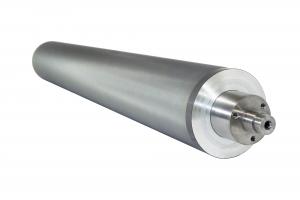
The cleaning services and products required to maintain flexo printers will depend on what types of presses are being used by the business. For instance, if the presses have anilox rollers, then you will need an anilox cleaning system.

To learn more about anilox cleaning, printing press parts washing, and other cleaning products and services for your printing presses, please feel free to contact Flexo Wash at 888-493-5396 today! We offer a large variety of cleaning equipment to meet every cleaning need within the printing industry, regardless of the size or type of printing press or inks used.




 Flexo Wash Blog